
Pool Automation Installation in Frisco, TX
Matched to What You Own
We check what your existing equipment can actually talk to before recommending a controller.
Response Time 1 to 2 Hours
Automation Is a Compatibility
Problem First
Licensed technicians who audit your equipment before quoting a controller
Every brochure sells the app. The app is the easy part. What decides whether a system works is whether the equipment on your pad can actually be controlled. A good deal of older equipment cannot.
A controller does two things. It switches power through relays, and it turns valves to send water where you want it. Smarter equipment like a variable speed pump or salt system has to speak the same language as the controller. If it does not, you get an on-and-off switch and nothing more.
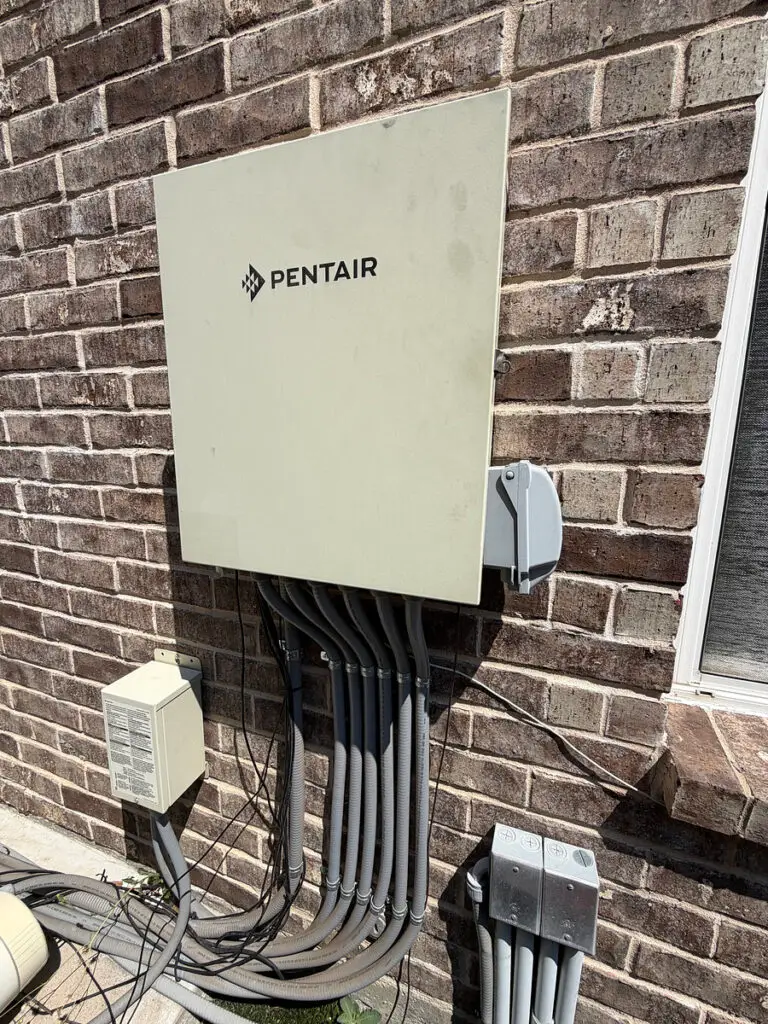
NorTex works with Jandy, Pentair, and Hayward automation systems, allowing us to evaluate how your existing equipment will communicate with the controller before we recommend an installation.
That is why we audit the equipment pad first. Quote a pool automation installation from a product page instead of from your actual equipment, and you can end up with a screen that only runs half the pool. Our technicians hold a Residential Appliance Installer License issued by the Texas Department of Licensing and Regulation.
Equipment Audit + Protocol Check + System Selection
+ Wiring and Actuators + Configuration and Handover
The order matters more here than on any other equipment job, because the decisions are locked in once the load center is mounted. We establish what is possible before anyone talks about brands.
Equipment Audit
We list every piece of equipment on the pad with its model and age, since that determines what can be controlled and what needs replacing first.
Protocol Check
Variable speed drives and chlorine generators only integrate properly when they share a communication standard with the controller, so we confirm that before selecting.
System Selection
We match a controller to your equipment count, your valve arrangement and whether a spa shares the pad, rather than to a feature list.
Wiring and Actuators
The load center gets mounted and wired, valve actuators fitted where water needs redirecting, and sensors placed so they read what they claim to read.
Configuration and Handover
We build the schedules, set the modes you will actually use, then walk you through it so the system does not end up permanently on manual.
Pool Automation Installation in Frisco, TX
Automation swaps a wall of timers and switches for one controller and a phone. NorTex Pools handles pool automation installation across Frisco, working with Jandy, Pentair and Hayward platforms. Jandy is the most searched automation brand in the country by a wide margin.
What a Controller Actually Does
Strip away the app and a controller does two simple jobs. Both are worth knowing before you buy one.
The first is switching. Relays inside the load center carry power to each piece of gear. The controller decides which ones close, and when. That is how schedules work. It also means the relay count sets a hard ceiling on how much you can automate.
The second is water routing. Actuators sit on your existing valves and turn them. That is what lets a system swap between pool and spa, or open a water feature, with nobody walking outside. Fit no actuators and you can automate power but not flow.
Chemical Automation and How It Measures
Chemical automation works differently, and this is where most explanations stop short. A controller does not measure chlorine. It reads ORP, short for oxidation reduction potential, which is the electrical charge of the oxidiser in the water. That reading is what tells it to call for more.
Two things in a pool move fast enough to justify that. One is pH. The other is chlorine. Everything else drifts slowly enough to handle by hand.
The reading tells the controller to switch a feeder on or off. It stands in for a direct test. That works well inside a range, and less well outside it.
Why the Probe Still Needs Checking
ORP and chlorine do not track in a straight line. At low chlorine the reading jumps for a tiny change. At high chlorine it barely shifts for a big one. So the controller is sharpest exactly where you need it least.
Other things skew it too. Stabilizer, non chlorine shock and plain dirt all shift the reading. Stabilizer matters here, because most Frisco pools run it hard all summer to shield chlorine from the sun.
So probes need checking against a known standard, and a clean once a month as a baseline. Pools running high Stabilizer need it more often.
Adding Automation to an Existing Pool
Yes, and most Frisco retrofits go in easily. The load center mounts at the pad. Relays wire to the gear you have. Actuators fit onto the valves already there.
Cost climbs when gear is too old to talk. A single speed pump goes on and off, and that is all. An older heater may take a temperature call and ignore the rest. A salt unit from another brand may refuse to join in at all.
None of that blocks a pool automation installation. It changes what you get for the money. Have that talk before the order goes in.
Compatibility Decides Everything
Controllers talk to gear through brand standards, and those standards are not shared. One brand across the pad gives you the most. The controller can then read and set speeds, temperatures and output levels rather than just feeding power.
Mixed pads are normal and they work. A Pentair controller will switch a Hayward pump on and off through a relay. It will not vary the speed. Speed is most of why that pump was worth buying.
That is the trade, and it is worth weighing before you commit to a brand. Full control over matched gear, plain switching for everything else.
What Automation Does Not Do
It does not test your water. Even with chemical automation fitted, health codes and every product label still call for a manual test to confirm the real chlorine level. The controller is guessing well, not measuring.
It does not maintain gear either. A controller running a filter on schedule has no idea that filter needs work, and it will happily run a struggling pump exactly as told until something gives. That limit is worth understanding before a pool automation installation, because it is the one homeowners assume away.
What it does deliver is consistency. Schedules run whether you remember or not, and nothing gets left on overnight. That is worth paying for. It is also a smaller claim than the one usually made.
When the Controller Fails
Automation adds a part that can fail, and the way it fails catches people out. A dead controller can strand gear in whatever state it was last told to hold. On a July weekend that means a pump that will not start, or a heater that will not stop.
Most systems keep manual overrides at the load center for this reason. Learning where they are is worth five minutes at handover. Panels also fail quietly, and those are the ones that waste a homeowner a whole weekend. A schedule stops firing without warning. Sensors report temperatures that are not real. Relays click and pass no power at all.
The controller is not always at fault. A pump, a heater, a sensor or a corroded wire gives you the same symptoms. So we start at the gear, not at the screen.
Choosing a System for a Frisco Pool
Start with relay count and actuator count. Those two numbers cannot grow later without new hardware. Count what you want controlled, then add one.
Then be honest about how you will use it. Households that genuinely adjust schedules from a phone through the season get real value out of the investment. If you will set it once and never open the app again, spend the money on better gear instead.
One Frisco factor pushes hard toward automation. Long seasons mean long run hours, and a variable speed pump on a proper schedule is where a pool automation installation pays back fastest.
FREQUENTLY ASKED QUESTIONS
How much does it cost to automate a pool?
NorTex Pools charges a flat $150 service call in Frisco covering an equipment audit and a written quote. That fee is waived when you proceed with the repair or installation. Plan members pay $135. Relay count and valve actuators set the equipment cost, since a mild setup and a full-featured system are very different jobs.
Can you add pool automation to an existing pool?
Yes, and most retrofits are straightforward. The load centre mounts at the pad, relays wire to existing equipment, and actuators fit onto diverter valves already installed. The limit is older gear that cannot talk to a controller. It goes on and off, but nothing finer than that.
Are pool automation systems worth it?
Worth it for consistency rather than savings. Schedules run whether you remember or not. But chemical automation still requires manual testing to confirm disinfectant levels, and a household that sets it once and never opens the app again would get more value from better equipment.
Which pool automation system is best?
The best system is whichever one your existing equipment already communicates with. Matching the controller brand to your pump and chlorine generator gives full speed and output control. Mixing brands still works, but reduces most equipment to simple on and off switching through a relay.
Does pool automation test the water for you?
No. Chemical automation measures oxidation reduction potential, which approximates disinfectant level rather than measuring it directly. Health codes and chemical product labels still require a manual test. Probes also need periodic calibration and monthly cleaning, more often on pools running high stabiliser.