
Pool Salt Systems in Frisco, TX
Set to 3,200 PPM
Salt system installation, cell replacement and sizing, with the pump interlock verified before the generator runs.
Response Time 1 to 2 Hours
The Salt Is Not
the Sanitizer
Licensed technicians who size the cell to the pool rather than to the box
A salt pool is a chlorine pool. The salt dissolved in the water is raw material, and a cell full of electrically charged plates converts it into free chlorine as water passes through. Once that chlorine has done its work it reverts to salt, so the cycle runs almost continuously.
Two numbers govern the whole thing. Salt sits between 3,200 and 3,500 ppm on most systems, and reaching 3,000 takes at least 250 pounds of salt for every 10,000 gallons. Below that range the cell cannot produce. Above it, some units simply shut down.
There is also a safety requirement that rarely gets mentioned. Electrolysis produces traces of hydrogen, which is why every generator carries an interlock that stops it when the pump stops. Our technicians hold a Residential Appliance Installer License issued by the Texas Department of Licensing and Regulation, and that interlock gets verified on every install.
Water Test + Cell Sizing + Salt Addition
+ Installation and Interlock Check + Output Calibration
A salt system either works from day one or fights you for years, and the difference is set during installation. We work through five checks in order and hand over the readings.
Water Test
We measure existing salt, pH, alkalinity, stabiliser and calcium hardness, since the cell performs against that chemistry rather than in isolation.
Cell Sizing
We size the cell above your pool volume rather than to it, because a cell running at part output lasts considerably longer than one held at maximum.
Salt Addition
Salt goes in at roughly 250 pounds per 10,000 gallons to reach 3,000 ppm, added gradually with the pump running and retested before we finish.
Installation and Interlock Check
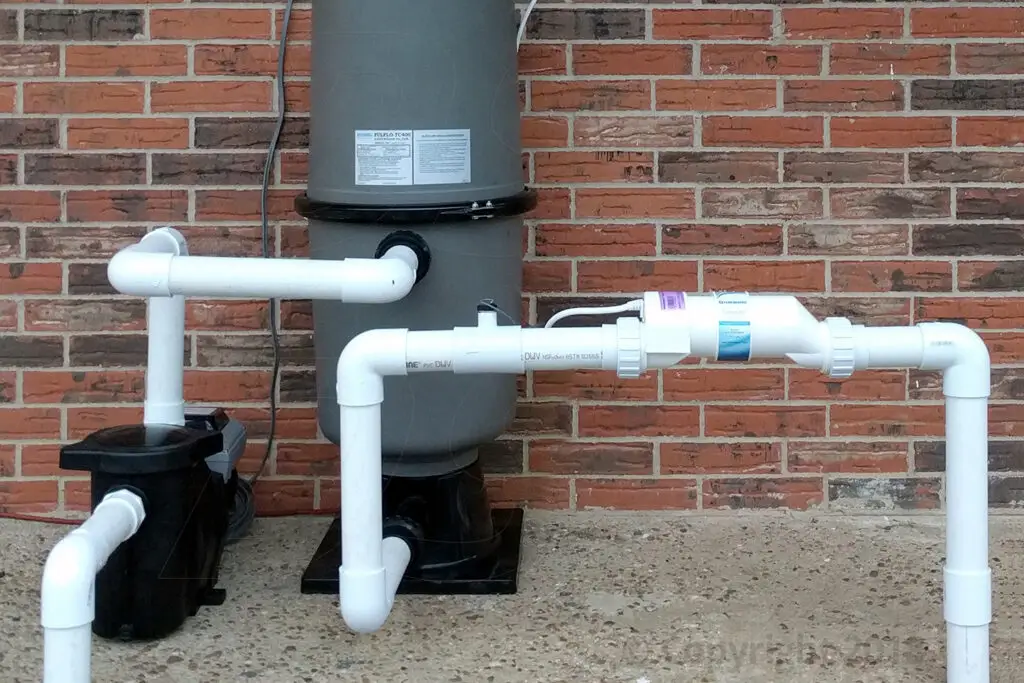
The cell is plumbed into the return line with a flow switch, wired to its power supply, and we confirm the pump interlock actually shuts the unit down.
Output Calibration
We set output to hold your target chlorine, record the salt reading and starting figures, and show you what the display should look like.
Pool Salt Systems in Frisco, TX
Most new residential pools now get a chlorine generator when they are built, and plenty of older Frisco pools are converted later. NorTex Pools handles pool salt system installation, cell replacement and sizing across Frisco. We work with Pentair, Hayward and Jandy, and Jandy is the most searched salt cell brand in the country by a clear margin. All three build to the residential standards published by the Pool & Hot Tub Alliance.
What a Salt System Actually Does
The salt in a saltwater pool sanitizes nothing. It is stock for a small chemical plant sitting in your return line.
Inside the cell sit layers of plates carrying a current from the generator power supply. Water passes across them. Electrolysis splits the dissolved salt and produces free chlorine directly in the circulation line, which sanitizes the water exactly as chlorine from a bucket would.
What makes the system worth having is what happens next. The chlorine reverts to salt and water after it works, so the same salt gets used again. That is why a pool salt system runs almost self-sustaining and why you are not buying chlorine every fortnight.
Salt Levels and Why They Matter
Salt belongs between 3,200 and 3,500 ppm on most residential generators. Some designs run as high as 8,000. Getting there from zero takes at least 250 pounds of salt for every 10,000 gallons of water.
Both directions cause problems. Too little salt and the cell cannot produce chlorine. That is the most common reason a salt pool loses Sanitizer while the display still shows the unit running. Too much salt and many generators shut themselves off to protect the plates.
Newer generators measure salt themselves and adjust output to hold production steady. Most will warn you when the level drifts outside range. Act on that warning rather than clearing it.
Where the Salt Goes
Salt does not evaporate. Water leaves, salt stays, so concentration actually rises as a pool evaporates through a Frisco summer. What removes salt is water leaving with the salt still in it.
- Filter backwashing, which sends a real volume of salted water to waste
- Rain dilution, which lowers concentration without removing any water
- Splash-out over the coping during heavy use
- Drag-out on swimmers, towels and floats
- Any leak, or a deliberate partial drain
That list explains why salt gets topped up rather than added once. A pool that backwashes often needs more attention to salt than one on a cartridge filter that never sends water to waste.
The Interlock That Stops the Generator
Electrolysis produces small amounts of hydrogen gas. In normal operation the circulating water carries it away and it vents harmlessly to atmosphere, which is why nobody thinks about it.
The problem case is a cell that keeps generating while the pump has stopped. With no flow, hydrogen has nowhere to go. It accumulates inside the cell housing, and that is a genuine explosion hazard rather than a theoretical one. Every chlorine generator carries an interlock that shuts the unit down when the pump is off.
That interlock is the most important thing to verify on any pool salt system. It is also exactly what a rushed installation skips. We test it rather than assume it.
Sizing the Cell
Cells carry a rating in gallons, and the honest advice is to buy more than your pool needs. A cell rated for 40,000 gallons on a 20,000 gallon pool is not oversized, it is sensibly specified.
The reason is run time. A cell sized exactly to the pool runs near maximum output all season to keep up. Plate life gets consumed by output rather than by calendar years. Put a larger cell on that same pool, run it at forty percent, and the plates last considerably longer.
Undersizing shows up in August. The pool demands the most chlorine exactly when the water is warmest. A cell already at maximum has nothing left to give, and that is when a pool salt system feels like it has failed.
How Long a Salt Cell Lasts
Salt cells are consumable. The plates carry a coating that is gradually spent producing chlorine, and once it is gone the cell stops working regardless of how clean it is or how healthy the rest of the system looks.
What shortens that life is predictable. Maximum output shortens it. So does low salt, which forces the unit to work harder. So does scale on the plates. Frisco hard water makes scale the local factor, which is why many cells here come with reverse polarity self cleaning as standard.
The cost of that replacement is the number to plan for. Owning one of these means committing to a cell every few years. Any comparison that leaves it out is misleading.
What a Salt System Does Not Do
A pool salt system does not end pool maintenance, and anyone implying otherwise is selling something. The generator produces chlorine. Everything else in the water is still yours to manage.
Chlorine produced this way has only a minor effect on overall chemistry, though pH does drift upward over time. Alkalinity, calcium hardness and stabiliser all still need testing. Stabiliser matters more on a salt pool, because the system makes chlorine continuously under Texas sun.
Salt level itself becomes a test you did not previously run. Titration kits and dip-and-read strips both work, and salt needs checking periodically rather than only when the generator complains.
Is a Salt System Right for Your Frisco Pool
Salt suits people who want steady sanitization without handling chlorine. It suits people comfortable trading a smaller cost every month for a larger one every few years.
It suits Frisco pools reasonably well. Long seasons mean high chlorine demand, and continuous generation handles that better than periodic dosing. Hard water is the argument on the other side, because scale is what shortens cell life here.
The conversion itself is straightforward on most pools. The cell goes into the return line, the power supply mounts at the pad, salt goes in and the system runs. Sizing and the chemistry it inherits decide how well it works.
FREQUENTLY ASKED QUESTIONS
How much does a salt system for a pool cost?
NorTex Pools charges a flat $150 service call in Frisco covering assessment and a written quote, applied toward the work if you proceed. Plan members pay $135. The generator sets the up front cost, and the replacement cell every few years is the number most quotes leave out.
Are salt water pool systems worth it?
They are worth it for convenience rather than savings. You stop handling chlorine and sanitation stays steadier, but you commit to a replacement cell every few years. Anyone presenting a pool salt system as cheaper to run is ignoring that cell, which is the largest recurring cost.
What are the disadvantages of a salt water pool?
Three things. The cell is consumable and eventually needs replacing. pH tends to drift upward, so it needs watching. Hard water leaves scale on the plates, which matters in Frisco. Salt also becomes one more level to test, using either a titration kit or dip and read strips.
Is it hard to maintain a saltwater pool?
No, but it is not maintenance free either. The generator handles chlorine only. You still test pH, alkalinity, calcium hardness and stabiliser, plus salt itself. Stabiliser matters more here, because chlorine is produced continuously under Texas sun and needs protecting from it.
What should the salt level be in a pool?
Most residential generators want 3,000 to 3,500 ppm, and some designs run as high as 8,000. Reaching 3,000 from zero takes at least 250 pounds of salt per 10,000 gallons. Below range the cell cannot produce chlorine. Above it, many units shut down to protect the plates.