
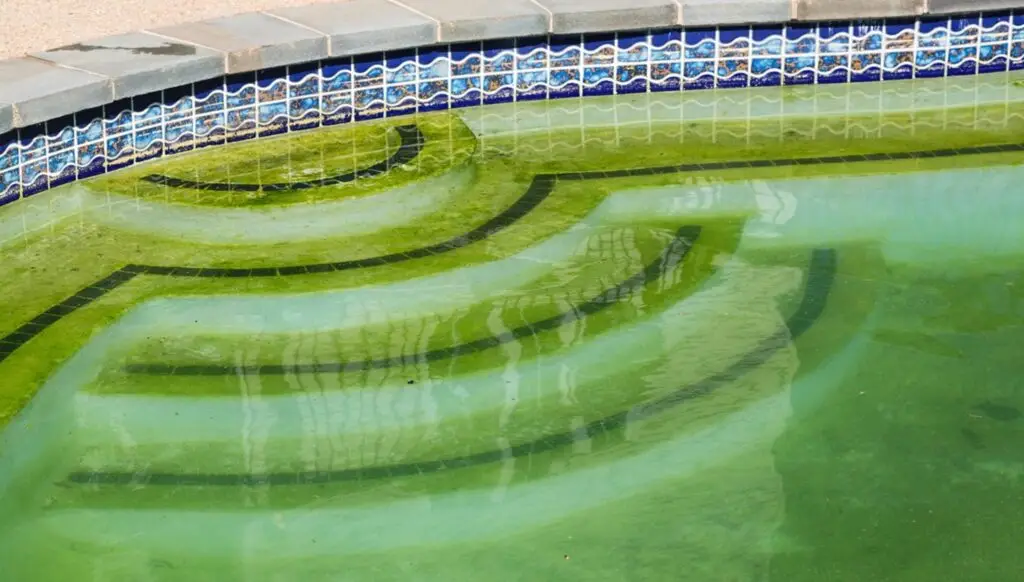
Why Is My Pool Turning Green?
You walk outside, look at your pool, and the water has turned green. It’s one of the most common — and most alarming — things pool owners in Frisco deal with. The good news: a green pool almost always has a fixable cause. The bad news: the longer you wait, the worse it gets and the more expensive the fix becomes.
At NorTex Pools, we treat green pools across Frisco regularly. In this guide, we’ll explain exactly why pools turn green, what the different shades of green mean, how to fix it step by step, and most importantly — how to prevent it from coming back.
Don’t Wait on a Green Pool
A pool that’s light green today can turn dark green or black within 48–72 hours in Frisco’s summer heat. The deeper the color, the more chemical treatment, time, and cost it takes to recover. Act fast.
Why Is Your Pool Turning Green?
Low or Zero Chlorine Levels
Chlorine is your pool’s primary defense against algae. When free chlorine drops below 1 ppm (parts per million), algae spores — which are always present in pool water — seize the opportunity to multiply rapidly. In Frisco’s summer heat, algae can take hold and visibly green a pool in as little as 24–48 hours once chlorine is depleted.
Common reasons chlorine drops quickly include heavy rain diluting the water, high bather load, intense UV exposure burning off unstabilized chlorine, or simply missing a treatment day. In saltwater pools, a failing or fouled salt cell can also cause chlorine output to drop without the owner realizing it.
Imbalanced Water Chemistry
Even if you have chlorine in the water, it may not be working effectively. Chlorine’s sanitizing power is highly sensitive to pH levels. When pH rises above 7.8, chlorine becomes largely ineffective — sometimes as little as 10% active. This means algae can still grow even when your chlorine test reads normal.
Low cyanuric acid (CYA / stabilizer) is another silent cause. CYA protects chlorine from being burned off by UV sunlight. Without enough stabilizer, chlorine in an outdoor Frisco pool can be depleted within hours on a sunny day. On the flip side, CYA that’s too high (above 80 ppm) can also suppress chlorine’s effectiveness — a condition known as chlorine lock.
Poor Circulation & Filtration
Your pump and filter work together to keep water moving, distribute chemicals evenly, and remove debris that feeds algae. If your pump isn’t running long enough each day, or your filter is clogged and not filtering properly, you’ll end up with dead zones — areas of the pool where water sits still and chlorine never reaches. Algae thrives in these spots.
In Frisco during peak summer, pools should be circulated for 8–12 hours per day. Clogged pump baskets, dirty filter media, or a failing pump can all reduce circulation enough to allow algae to establish itself quickly.
Heavy Rain & Environmental Contamination
Frisco experiences significant spring storms and occasional heavy summer rain. When large amounts of rainwater enter your pool, it dilutes and destabilizes water chemistry — lowering chlorine levels, shifting pH, and dropping alkalinity. Storm runoff also carries dirt, organic debris, lawn chemicals, and algae spores directly into the water.
Pollen is another major factor in North Texas. Heavy pollen seasons in spring introduce large quantities of organic material that consumes chlorine and provides nutrients for algae growth. A pool can go from clear to cloudy green in just a few days during peak pollen season if chemistry isn’t adjusted.
Missed or Skipped Maintenance
Pool water chemistry doesn’t stay balanced on its own — especially in the Texas heat. Missing even one or two weekly treatments during summer can be enough to allow conditions to shift and algae to take hold. What starts as a slight chlorine dip can compound quickly: low chlorine allows algae to grow, algae consumes more chlorine, chlorine drops further, and the pool greens faster.
This compounding effect is why pools that go untreated for 1–2 weeks in summer can turn from clear to fully green or even black-green. The longer algae is allowed to grow, the deeper it embeds into pool surfaces — making it harder to treat and increasing the risk of permanent staining.
What Does the Shade of Green Tell You?
Light Green / Teal Tint
Early-stage algae growth. Water is still somewhat clear. Caught early, this can often be resolved with a shock treatment and algaecide within 24–48 hours.
Medium Green
Established algae bloom. Visibility into the pool is limited. Will require multiple shock treatments, brushing, and several days of filtration to clear.
Dark Green / Murky
Heavy algae infestation. Pool bottom is not visible. Professional treatment is strongly recommended. Recovery can take 5–10 days with aggressive treatment.
Black-Green / Swamp
Black algae present. This is the hardest form to eliminate and can permanently stain pool surfaces. Requires professional intervention and may need partial draining.
How to Fix a Green Pool
Test Your Water Chemistry First
Before adding any chemicals, test your water. You need to know your current pH, alkalinity, CYA, and chlorine levels. Adding shock to water with incorrect pH makes it far less effective. Adjust pH to 7.2–7.4 and alkalinity to 80–120 ppm before shocking.
Brush the Entire Pool
Brush all walls, steps, corners, and the floor vigorously before adding shock. This breaks up algae colonies and removes the protective layer algae forms on surfaces, making the shock treatment far more effective. Use a stiff nylon brush for plaster and a softer brush for vinyl liners.
Shock the Pool — and Shock It Hard
For a green pool, you need to super-chlorinate — not just a standard dose. Use calcium hypochlorite shock and aim for a chlorine level of 10–30 ppm depending on severity. A light green pool may need 2–3 lbs of shock per 10,000 gallons; dark green pools may need 3–5x that. Shock at dusk to prevent UV from burning it off immediately.
Run Your Filter Continuously
After shocking, run your filter 24 hours a day until the pool clears. Your filter will be capturing massive amounts of dead algae — clean or backwash it every 8–12 hours to prevent clogging and pressure buildup. A clogged filter during recovery dramatically slows the clearing process.
Add Algaecide
Once chlorine begins dropping back toward normal range (below 5 ppm), add a quality polyquat algaecide. This kills any remaining algae that survived the shock and helps prevent regrowth. Do not add algaecide while chlorine is still very high — it will be destroyed before it can work.
Brush Again & Vacuum to Waste
After 24–48 hours, brush the pool again. Dead algae will settle to the bottom as gray or white sediment. Vacuum it directly to waste (bypassing the filter) so it doesn’t re-enter the water. Vacuuming to filter during heavy algae recovery will quickly clog your filter and return debris to the pool.
Retest & Balance Chemistry
Once the water clears, do a full water chemistry test and bring everything back into balance. The shock treatment and extended filtering may have shifted your pH, alkalinity, and CYA levels. Balanced chemistry is what prevents the algae from returning.
Pool Water Chemistry Targets for Prevention
| Parameter | Ideal Range | Why It Matters | Frisco Note |
|---|---|---|---|
| Free Chlorine | 1–3 ppm | Primary sanitizer — kills bacteria and algae | Test twice weekly in summer; UV burns through chlorine fast |
| pH | 7.4–7.6 | Controls chlorine effectiveness; affects skin comfort | High pH is common — reduces chlorine potency significantly |
| Total Alkalinity | 80–120 ppm | Stabilizes pH against rapid swings | Rain events can drop alkalinity quickly in TX storms |
| Cyanuric Acid | 30–50 ppm | Protects chlorine from UV degradation | Critical in Frisco’s intense outdoor sun exposure |
| Calcium Hardness | 200–400 ppm | Prevents scale buildup or corrosion | Frisco’s hard water often pushes calcium high — monitor closely |
How to Keep Your Pool from Turning Green Again
Test Water Twice a Week in Summer
Frisco’s heat burns through chlorine fast. Testing only once a week during peak summer is not enough. Twice weekly testing catches chemistry shifts before they turn into algae problems.
Maintain Proper Chlorine Levels
Keep free chlorine between 1–3 ppm at all times. For saltwater pools, verify your cell is producing at the correct output level — low output is a common and overlooked cause of green pools.
Shock Weekly During Summer
A weekly shock treatment — especially after heavy use, a party, or rain — keeps chlorine at levels algae can’t survive. Think of it as a reset button for your water chemistry.
Run Your Pump Long Enough
Run your pump 8–12 hours per day during summer months in Frisco. Good circulation distributes chlorine evenly and eliminates the dead zones where algae takes hold first.
Keep Your Filter Clean
A dirty or clogged filter can’t do its job. Clean or backwash your filter on schedule and perform a full disassembly deep clean every 3–6 months depending on your filter type.
Use a Preventative Algaecide
Adding a maintenance dose of polyquat algaecide every 1–2 weeks provides a secondary layer of protection against algae growth, especially during high pollen season and after storms.
Search
Categories
Recent Posts
DE Filter vs. Cartridge Filter
When it comes to keeping your pool water crystal clear, …
How Long Should Pool Service Take?
When it comes to keeping your pool water crystal clear, …
How Often Should Salt Cells Be Cleaned?
Saltwater pools have become one of the most popular choices …
Tags
Plan Your Dream Gateway
Luxury, comfort, and unforgettable experinences await you