
What Is Included in Weekly Pool Service?
A real weekly pool service visit in Frisco covers four jobs: testing and balancing the water, cleaning the pool, checking the equipment and sending you a report. If one of those four is missing, you’re paying for part of a service. Repairs, filter teardowns and green pool recovery sit outside the weekly visit and get priced on their own.
This guide walks the checklist line by line from the tech’s side of the fence. It covers what each task catches, what costs extra, how the work shifts with North Texas seasons and how to read two quotes side by side.
What Weekly Pool Service Covers on Every Visit
Every visit should cover the same four groups of work, every week of the year. Here’s how our plan lays them out:
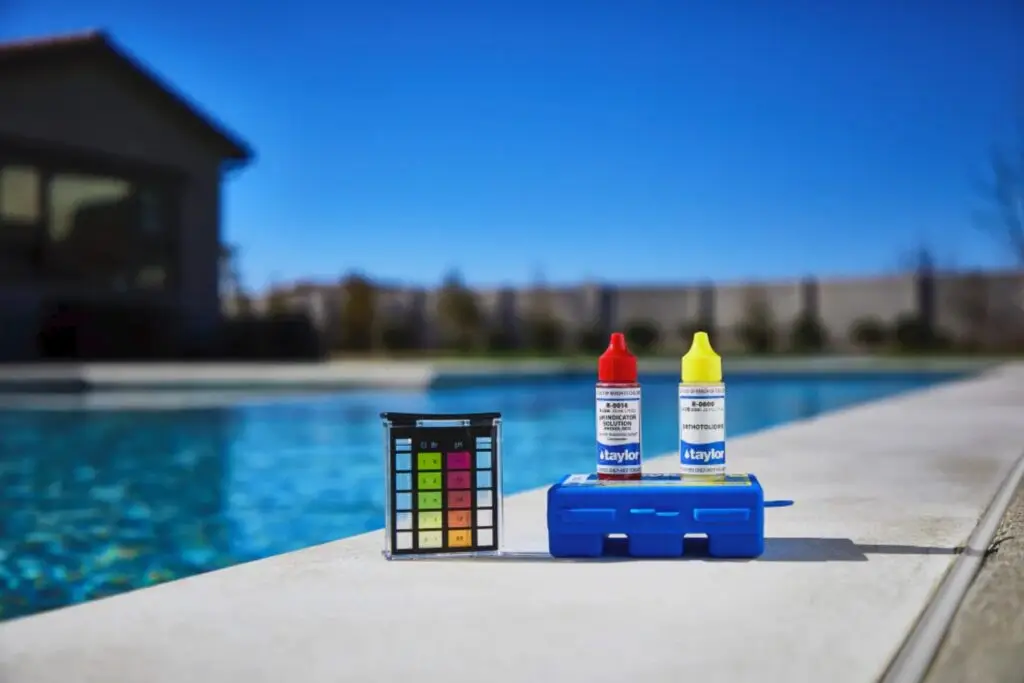
- Test the water for free and combined chlorine, pH, alkalinity, calcium, stabilizer and salt, then dose to those numbers.
- Clean the pool by skimming, brushing the walls, steps and waterline tile, vacuuming the floor and emptying every basket.
- Check the equipment, from filter pressure and the pump to the salt cell, gas heater, automation, plumbing and water level.
- Send a digital report with the readings, chemicals added, equipment notes and photos.
That adds up to 52 visits a year from the same trained technician. Our weekly pool service starts at $280 a month, and you can see the whole plan on our weekly pool cleaning plans page. The rest of this guide explains what each line does for your pool, so you can hold any company to it, us included.
Pool Water Testing and Chemistry on Every Visit
Pool water testing comes first, because every other decision on the visit depends on those numbers. A full test checks more than chlorine and pH, and the tech doses chemicals to those readings.
Free and Combined Chlorine
Free chlorine is the part still killing germs. Combined chlorine has already reacted with sweat and sunscreen, and it’s what gives a pool that “pool smell.” The CDC’s home pool guidance calls for at least 1 ppm free chlorine, or at least 2 ppm when the water carries stabilizer. A tech who only reads total chlorine can’t tell those two numbers apart.
pH, Alkalinity and Calcium
We adjust pH to 7.4 to 7.6, inside the CDC’s 7.0 to 7.8 range. Alkalinity holds pH steady so it doesn’t swing between visits. Calcium is the local fight. Frisco buys its water from the North Texas Municipal Water District, and the city’s 2025 Water Quality Report puts total hardness at 96 to 200 ppm. Every summer top-off adds more, and high pH plus high calcium is how scale lands on tile, salt cells and the heat exchanger in a gas heater.
Stabilizer, Salt and Phosphates
Stabilizer, or cyanuric acid, shields chlorine from the Texas sun. Too much of it slows chlorine down, though, so a good tech watches the trend instead of just adding more. On salt pools, the salt level gets its own test. Phosphate treatment only goes in when the water calls for it.
Weekly Pool Cleaning: Skim, Brush, Vacuum and Baskets
The cleaning half of weekly pool service comes down to four jobs. Brushing is the one that keeps algae from getting a foothold, so we do it on every visit.
1. Skim the Surface
Leaves, cottonwood fluff and bugs come off the top before they sink. Once debris reaches the floor, it feeds algae and eats chlorine, so skimming first saves work later.
2. Brush Walls, Steps and Tile
Walls, steps, corners and the waterline tile all get brushed. That breaks up algae in shady corners before it grabs hold. The tile pass also slows the white calcium line Frisco water leaves behind.
3. Vacuum the Floor
The floor gets vacuumed by hand or with your automatic cleaner, whichever fits the pool that day. Fine dirt left on the floor clouds the water and feeds the next bloom.
4. Empty Every Basket
That means the skimmer baskets and the pump basket. A packed pump basket chokes flow, so the filter sees less water and the pump works harder for less.
If you only remember one line from this section, make it brushing. A pool can test fine on Tuesday and still go hazy by Saturday when the corners never see a brush.
The Equipment Check Inside Weekly Pool Service
The equipment check is a look-and-listen inspection, not a repair. Its job is to catch a small problem while it’s still cheap. On our visits, the tech covers:
- Filter pressure, read and logged every time. On filters that backwash, the tech also judges whether one is due. Pentair says its Clean & Clear cartridges need cleaning at 8 to 10 psi over the clean starting pressure.
- Pump operation. Does it sound right, move water and hold prime?
- Salt cell output, plus a visual check of the gas heater.
- Automation and sanitizer equipment, checked for errors and the right settings.
- Visible plumbing and fittings, looked over for drips.
- Water level, and whether the auto-fill works, if you have one.
What the check leaves out is the fix. If the tech finds a weeping pump seal or a heater that won’t stay lit, that turns into a repair with its own quote. Still, the weekly check means you hear about it in week one instead of week ten.
The Service Report: Your Record of Each Visit
The report is the only part of the visit most owners ever see, so it should carry the whole visit. After every stop, we send a digital report to your phone with the chemical readings, what we added and how much, equipment notes and photos.
A report that just says “pool serviced” is a receipt. Over a few months, a real one shows trends, like filter pressure creeping up or salt dropping. You also get the same technician every week and direct access to that tech between visits.
Pool Service Checklist: Every Line of the Weekly Visit
Here’s the full weekly pool service checklist in one place, the way we run it.
| Group | Task | What It Catches |
|---|---|---|
| Chemistry | Free and combined chlorine | Low sanitizer and spent chlorine before algae starts |
| Chemistry | pH, adjusted to 7.4 to 7.6 | Eye sting, scale and corrosion |
| Chemistry | Total alkalinity | pH that swings from week to week |
| Chemistry | Calcium hardness | Scale from hard tap water and evaporation |
| Chemistry | Stabilizer, salt and phosphates as needed | Chlorine lost to sun, low salt, algae food |
| Cleaning | Skim, brush walls, steps and tile | Algae footholds and waterline scale |
| Cleaning | Vacuum floor, empty skimmer and pump baskets | Cloudy water and choked flow |
| Equipment | Filter pressure, logged | A filter that’s coming due for cleaning |
| Equipment | Pump sound, flow and prime | Air leaks, worn bearings, a failing seal |
| Equipment | Salt cell output and gas heater visual | Low output, scale, nests and debris |
| Equipment | Automation, plumbing, water level and auto-fill | Error codes, drips and evaporation losses |
| Reporting | Readings, chemicals added, notes and photos | A written record of every visit |
Source: NorTex Pools weekly plan and service checklist, with chemistry ranges from CDC home pool guidance and the filter trigger from Pentair Clean & Clear product support.
What Does Pool Service Include, and What Costs Extra?
Weekly pool service keeps a healthy pool healthy. It doesn’t cover fixing broken parts or rescuing a pool that’s already green, and a full filter teardown is its own job too. Most companies bill those separately, so here’s how they work at ours.
Repairs and Replacement Parts
A leaking pump seal or a dead igniter is a repair job. At NorTex, equipment repair starts with a flat $150 service call that covers the trip, a full equipment inspection and a written diagnosis and quote. If you approve the repair, the $150 goes toward it. Weekly plan members pay $135 and get 10% off repair labor and parts, plus priority scheduling.
Filter Deep Cleaning
Weekly visits read the gauge. A teardown, where the tech pulls the cartridges or DE grids, rinses and degreases them and checks for tears, is its own job. We price filter and salt cell cleaning at a flat rate, with a lower rate for weekly plan members. Your first visit with us already includes a full filter teardown.
Salt Cell Acid Washing
The weekly check looks at cell output. Once scale builds on the plates, the cell comes off for an acid wash. Hayward says to inspect its TurboCell about every 3 months or 500 hours, and our salt cell cleaning schedule covers how Frisco water changes that.
Green Pool Recovery
A pool that’s already green needs more than a weekly stop. First the debris comes out, then heavy treatment and brushing, then the filter runs hard until the dead algae clears. That’s green pool cleanup, and a mild bloom is a far smaller job than black algae.
New equipment sits outside the weekly plan too. Pump, gas heater, filter and light installs get quoted per job, and so does a new salt system.
Seasonal Extras for Weekly Pool Service in Frisco
The checklist stays the same all year, but North Texas weather changes which lines take the most work. Summer is the big one, because open water around Frisco loses about 7.3 inches a month to evaporation in July, roughly three and a half times the January rate.
Source: Texas Water Development Board, Lake Evaporation and Precipitation, mean monthly gross lake evaporation for quadrangle 411 (covers Frisco), 1954 to 2025, retrieved October 2026.
Spring: Pollen, Cottonwood and Hail
Oak pollen and cottonwood fluff pack skimmer baskets and push filter pressure up fast from late February into May. That’s when the logged readings pay off, because the gauge warns you a filter clean is coming before the flow drops. After a spring hailstorm, also look over the pad for a cracked pump lid and tell your tech.
Summer: Triple-Digit Heat and Evaporation
NWS Fort Worth says DFW averages about 20 days a year at 100°F or hotter. Chlorine burns off faster in that sun, and the water level drops week to week. Low water starves the skimmer, so the water level and auto-fill check carries the most weight from June through September. Evaporation also leaves calcium behind, which is why hardness stays on the test list.
Fall: Leaves and Heater Prep
Live oaks, cedar elms and Bradford pears drop leaves into skimmers and onto the floor, so cleaning takes a bigger share of the visit. Then the gas heater visual check matters, since NWS Fort Worth puts the average first freeze at DFW on November 22. Heater repairs are billed separately, so book any work in October instead of on the first cold weekend.
Winter: Freezes and Salt Cell Slowdown
Hayward’s AquaRite guide says output drops at 60°F water and stops at 50°F, so salt pools often need liquid chlorine in midwinter. Freeze protection lives in your automation, and the weekly automation check is a good time to confirm it’s on. During Winter Storm Uri in February 2021, DFW sat at or below freezing for 139 straight hours, and pads that lost power had no freeze protection at all.
How to Compare Two Weekly Pool Service Quotes Line by Line
Put the quotes side by side and check each one against the four groups above. Price only means something once the scope matches, so ask every company these questions:
- Which chemistry numbers get tested? Chlorine and pH alone leave out alkalinity, calcium, stabilizer and salt.
- Is brushing on every visit, or only “as needed”?
- Does “baskets” mean the pump basket too, or just the skimmers?
- Will you see filter pressure readings in writing?
- What goes in the report, and does it include photos?
- Are chemicals part of the monthly price or billed separately? Companies do it both ways, so get the answer in writing.
- How much do a filter clean, a salt cell clean and a repair call cost, and is there a member rate?
- Do you get the same technician every week?
A lower quote that drops brushing and calcium testing usually isn’t cheaper once the first scaled salt cell comes due. Visit length matters as well, and our guide on how long a proper visit takes covers that side. For how this checklist runs on a local route, see our page on weekly pool cleaning in Frisco.
Want This Checklist on Your Pool Every Week?
NorTex Pools serves Frisco only, with the same tech at your pool every week and a report after every visit. Hold our weekly pool cleaning plans up against any quote you have. Then call us Monday through Friday, 8am to 6pm.
Call (469) 238-2660Frequently Asked Questions About Pool Service in Frisco
How much does weekly pool service cost in Frisco?
NorTex Pools’ weekly plan starts at $280 a month in Frisco and covers 52 visits a year. Each visit includes water testing and balancing, cleaning, an equipment inspection and a digital report. Repairs and filter deep cleans are priced on their own, and plan members get lower rates on both.
Do pool cleaners clean the filter every week?
No, a weekly visit checks the filter but doesn’t take it apart. The tech reads and logs the pressure and judges whether a backwash is due on filters that backwash. Cartridge filters can’t be backwashed, so they come apart for cleaning at about 8 to 10 psi over the clean reading, per Pentair. In Frisco, spring pollen pushes that number up fastest.
Does weekly pool service include salt cell cleaning?
The weekly visit checks salt level and cell output, but an acid wash is a separate job done only when scale shows. Hayward recommends inspecting its TurboCell about every 3 months or 500 hours of run time. With Frisco tap water reaching 200 ppm hardness, expect cells here to scale faster in summer.
How often does a pool guy come?
Once a week is the standard schedule for residential pool service, and NorTex visits 52 times a year. In North Texas, weekly is the minimum that keeps up with summer, when DFW averages about 20 days a year at 100°F or hotter. Between visits, owners still empty skimmer baskets after storms and watch the water level.
What should I do between weekly pool visits?
Empty the skimmer baskets after storms, watch the water level and run a quick test strip on hot weeks. The CDC suggests testing chlorine and pH at least twice a day for home pools, which few owners actually do. After a cottonwood bloom or a blue norther, a two-minute basket check saves your pump a lot of strain.
Is weekly pool service worth it if I can test my own water?
It’s worth it if you’d rather not brush, vacuum and check the equipment yourself every week. Testing is the easy part. The value sits in the work around it: brushing, filter pressure trends and a tech who spots a weeping pump seal early. If you enjoy the routine and know your equipment, doing it yourself is a fair choice.
Search
Categories
Recent Posts
The Easy Gas Pool Heater Maintenance Checklist for Frisco
A Frisco pool tech's guide to gas pool heater maintenance: the monthly checks you can do yourself, what a real tune-up includes, and why October is the time to book it.
Pool Freeze Protection: Easy Steps Before Frisco’s Next Freeze
Frisco pools stay open all winter, so a hard freeze or a power outage is what cracks pumps, filters and heaters. Here is the freeze-night plan: run the pump, test the sensor, wrap the weak spots and know what to drain.
DE Filter vs. Cartridge Filter
When it comes to keeping your pool water crystal clear, …
Tags
Plan Your Dream Gateway
Luxury, comfort, and unforgettable experinences await you